How to Maintain Your Botox and Dermal Filler Results in Denver
Botox and dermal fillers in Denver offer a host of long-term benefits, but require a thorough maintenance strategy to keep results consistent and long-lasting. Botox injections typically last 3-4 months, while dermal fillers last 6-18 months depending on product and treatment area. Aftercare, sun protection, and timely follow-ups can extend how long your results hold.
This guide walks you through what protects your investment, why Denver’s environment matters, and how to build a maintenance plan that works for your lifestyle. At Icon Dental, our approach to Botox and dermal filler treatments is grounded in the same root-cause thinking we apply to everything: understand the “why,” build a plan, and protect the outcome.
The Short Answer: What Actually Extends Botox and Filler Results
Consistent aftercare, daily SPF se, proper hydration, and scheduling follow-up appointments before results fully fade are the most reliable ways to extend results. Botox lasts 3-4 months on average, while dermal fillers last 6-18 months depending on product and placement area.
Patients who combine these habits with anatomically precise injection technique see more consistent, longer-lasting outcomes than those who treat each session as a standalone event. This proactive approach helps maintain the smoothing effect without needing a full restart every time.
Why Results Fade: Understanding How Botox and Dermal Fillers Work
Botox works by temporarily relaxing the targeted facial muscle, and the body metabolizes it naturally over time. As that process completes, muscle activity gradually returns. Most patients see full results for 2-3 months before the muscle begins reactivating, with complete wear-off around the 3-4 month mark.
Dermal fillers work differently. Hyaluronic acid-based fillers attract and bind water molecules to create volume. The body contains an enzyme called hyaluronidase that gradually breaks the product down. How fast that breakdown happens depends on which product was used, how deeply it was placed, and where it was injected.
Filler placed in high-movement areas like the lips and mouth corners breaks down faster than filler placed in the cheeks or temples, where movement is minimal. Injection depth and product selection matter for longevity, and fillers placed in the wrong tissue layers migrate and wear down faster.
The Denver Factor: Why Your Environment Affects Injectable Results
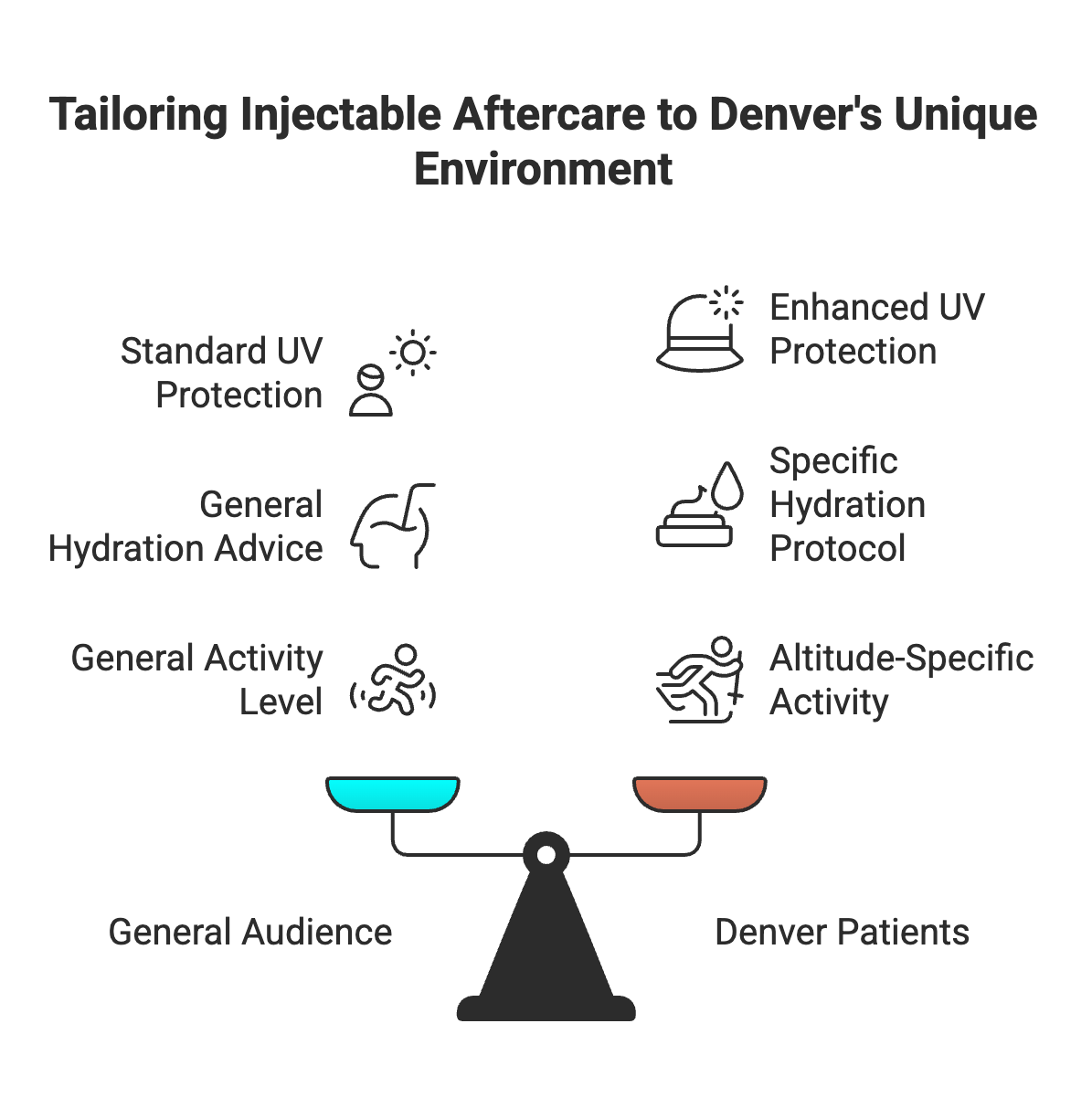
Most injectable aftercare advice is written for a general audience, but Denver Botox and dermal filler patients face a specific set of conditions that make maintenance more demanding. Ignoring these local factors is a common reason results fade faster than expected.
UV Intensity
Denver sits at 5,280 feet with over 300 days of sunshine annually. At this altitude, UV radiation is approximately 25% more intense than at sea level. UV exposure accelerates collagen breakdown in the skin, which directly affects how long fillers look their best. The plumping effect of a well-placed filler depends on surrounding skin tissue for support. Daily SPF is the single most protective thing you can do between appointments.
Humidity
Denver’s dry climate pulls moisture from the skin constantly. Hyaluronic acid fillers depend on skin hydration to maintain their volume effect. A well-hydrated patient in a humid climate and a dehydrated patient in Denver can get the same product and see different results at the 6-month mark. Think of hydration as part of your maintenance protocol rather than general wellness advice.
Active Outdoor Lifestyle
Skiing, hiking, and high-intensity exercise at altitude increase both sun exposure and metabolic rate. A higher metabolism processes Botox faster. Very active patients sometimes notice their results wearing off closer to the 3-month mark rather than 4. We factor your activity level into the maintenance conversations we have during your visit.
Immediate Aftercare: The First 48 Hours After Botox Injections
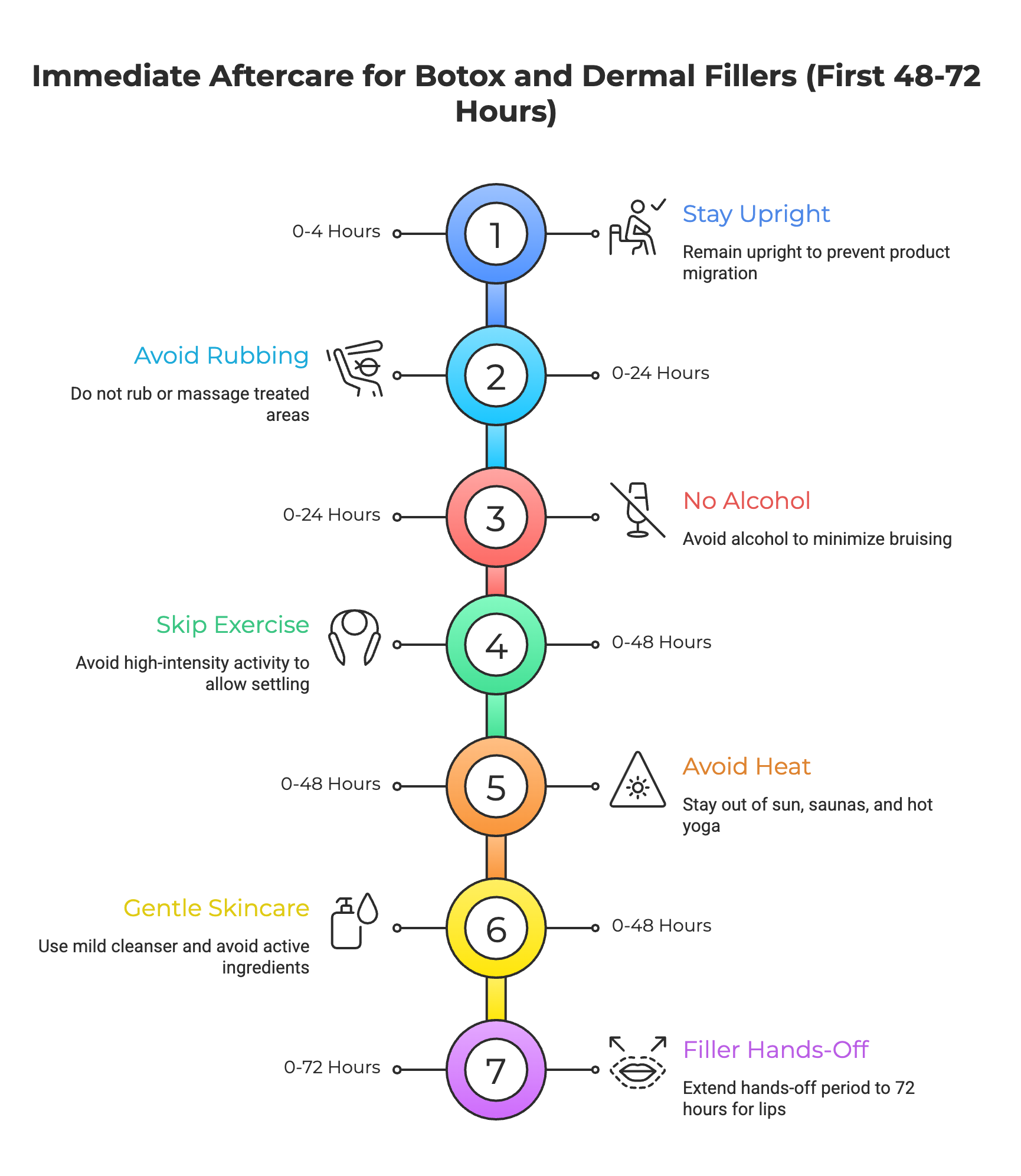
The first 48 hours after injections set the foundation for your results. Most issues like movement, migration, or premature fading trace back to something that happened in this window. These simple steps help the product settle correctly.
- Stay upright for at least 4 hours after Botox injections. Lying flat immediately after treatment can cause the product to migrate away from the targeted muscle.
- Skip exercise and high-intensity activity for 24-48 hours. Elevated heart rate and increased circulation accelerate product metabolism while it is still settling.
- Do not rub, massage, or apply pressure to treated areas for 24 hours. Even gentle pressure can displace Botox before it fully binds to the muscle receptor.
- Stay out of direct sun, saunas, and hot yoga for 48 hours. Heat increases circulation and can cause additional swelling and bruising.
- Avoid alcohol for the first 24 hours. Alcohol thins the blood, which increases the risk of bruising at injection sites.
- Use a gentle cleanser and hold off on active skincare ingredients like retinol and AHAs for 48 hours post-treatment.
For dermal filler patients, these same principles apply. The hands-off window may extend to 72 hours for certain areas, particularly the lips. Following these steps consistently reduces bruising and helps the product settle into the correct position.
Long-Term Maintenance: Building a Plan That Keeps Results Consistent
Immediate aftercare gets results off to the right start, but what you do in the following months determines how long they hold. For injectable patients who want predictable outcomes, maintenance needs to become a routine.
Daily SPF is the most protective habit you can build. We recommend a minimum of SPF 30 for daily use and SPF 50 for any extended outdoor activity. Pairing SPF with an antioxidant serum, like vitamin C, adds another layer of protection against UV-driven breakdown that affects both filler and tissue.
Hydration matters significantly in Colorado. Drink more water than you think you need to account for elevation-related dehydration, and use a topical hyaluronic acid serum that works to support filler results from the outside by keeping the skin plumped. This ensures the filler underneath looks natural and smooth.
Scheduling follow-up appointments proactively is the strategy that makes the biggest difference. Patients who wait until Botox has completely worn off often need more product per session. Patients who come in on a consistent schedule maintain their results with less product over time. Schedule a consultation with Icon Dental’s Denver Med Spa team to talk through how we structure injectable care.
When to Schedule Your Follow-Up Appointment
For Botox, we recommend scheduling your follow-up at 3 to 3.5 months, before full muscle activity returns. Staying just ahead of the wear-off keeps results looking consistent without interruption, and this also prevents the deep lines from reforming fully between treatments.
For dermal fillers, the timing depends on both the product and the treatment area. Lip filler typically needs refreshing at 6-9 months. Cheek filler can hold well for 12-18 months. Consistently working with a provider who tracks your product type, amount, and placement produces predictable results. This is part of a preventative injectable approach.
Combination Treatments That Extend Injectable Results
Injectables work best when the surrounding skin is healthy, and three related treatment categories pair especially well with Botox and filler maintenance for patients who want to get more out of each session.
PRF facials use your body’s own platelet-rich fibrin to stimulate collagen production. Better collagen density means the skin holds filler more effectively. PRF also improves skin texture and tone, which makes filler results look more natural.
Microneedling creates controlled micro-channels that trigger the collagen repair response. Regular sessions improve skin thickness and elasticity. Patients who combine microneedling with dermal fillers often find they need less product per session over time.
Medical-grade skincare rounds out the approach. Retinoids, antioxidant serums, and consistent SPF all support the skin structure that filler depends on. We think of skincare as the daily maintenance layer that keeps the foundation strong between injectable appointments.
How Icon Dental’s Training Changes the Way We Approach Injectables
Dental providers go through years of training in facial anatomy that exceeds standard injector certifications. We study the muscles, nerves, bone structure, and tissue layers of the face in clinical detail, and this knowledge directly informs how we plan and place injectables.
As experts in facial anatomy, Icon Dental’s downtown Denver dentists are uniquely positioned to provide treatments that enhance facial aesthetics while improving the overall appearance and confidence of our patients. Precise placement in the correct tissue layer means less product migration and more natural movement.
The TMJ-Botox connection is a clear example of how this integration works. Some patients come to us for Botox injections to treat jaw clenching and bruxism symptoms. The same knowledge of the masseter muscle that guides therapeutic placement also informs cosmetic Botox near the jawline.
Common Questions About Botox and Filler Longevity
On average, Botox lasts 3-4 months. Denver’s active outdoor lifestyle and high-altitude UV intensity can push some patients closer to the 3-month end of that range. Following consistent aftercare and scheduling follow-ups before full wear-off keeps results on the longer end.
High metabolic activity from exercise, frequent sun exposure without SPF, and the body’s natural enzyme activity accelerate filler breakdown. Denver’s dry climate and altitude add to this. Filler placed in high-movement areas like the lips also breaks down faster by design.
High-intensity exercise increases circulation and metabolic rate, which can speed up how quickly Botox is processed. Avoiding vigorous activity for the first 48 hours is the most protective window. If you are very active, discussing your routine with your provider helps set realistic expectations.
Yes. Daily SPF use, hydration, and combining denver dermal fillers with collagen treatments like PRF or microneedling help. Scheduling touch-ups proactively before full dissolution also extends the continuity of your results over time.
Most patients start on a 3-4 month schedule. With consistent maintenance, some patients can extend to every 4-5 months as muscles gradually retrain. Your provider can give you a specific timeline based on your anatomy and treatment history.
A Personalized Injectable Maintenance Plan at Icon Dental
When you visit Icon Dental for a consultation, we start with a conversation about your goals and lifestyle. We review facial structure and anatomy before recommending product types, treatments, and timing. For patients with TMJ concerns, we factor in how facial muscle activity affects both therapeutic and cosmetic injections.
For patients new to Botox injections or dermal fillers, we discuss realistic expectations for different areas. Our plan is not a fixed protocol. Instead, itt adjusts as your anatomy changes and as we track your response to different products. We want to use the least amount of product to achieve the most natural result.
Patients often tell us they have never had this kind of structured conversation about injectable care before. If you want a plan built around your specific goals, schedule your consultation today, and we’ll walk you through the process together.
The Bottom Line on Extending Your Injectable Results
Five things make the biggest difference in how long your results last:
- Aftercare in the first 48 hours sets the foundation.
- Denver’s altitude and dry climate require extra attention to SPF and hydration.
- Timing your follow-up before results fully fade keeps continuity.
- Combining injectables with treatments like PRF and microneedling improves skin quality.
- Anatomical knowledge of the provider affects placement precision.
For Denver patients who want a structured approach to injectables, Icon Dental offers consultations that address the full picture. Learn more about our dermal filler and Botox services to see what a planned approach looks like.